

Questions Can Change Everything: In Hiding
Part One of a series exploring how paying close attention to Genesis 3 can help us navigate relationships, understand God better, and find connection through asking great questions.

The Power of Questions
It’s actually impossible learn if there isn’t a question to ask. One of the oldest and most reliable models of education in the Western world, the Socratic method, is based on asking questions to generate new thinking.
Questions also denote a lack of knowledge. We all know what it’s like to be asked a question when the person asking already knows the right answer.
“Aren’t you supposed to be at school right now?” was a leading question I was often asked at the Chinese restaurant I frequented with my friends in high school. The obvious and correct answer was “yes,” mostly because our favorite time to go was during trigonometry. I’ve never been a math guy.
Leading questions like these feel manipulative and controlling because they imply we should already know the answer. Particularly when a leading question is asked in a sensitive or teaching context, the results can be detrimental. A learner or a hurting person can begin to believe a story about themselves that is, frankly, a bummer:
“Because I don’t know, there must be something wrong with me.”
But it’s still true that it’s impossible to learn if there isn’t a question to ask. Without a void of knowledge, there is no knowledge to pursue.
Questions are also incredibly powerful. Questions can create clarity, facilitate discovery, and lead to breakthrough moments that bring about real and lasting change in people’s lives. Questions can break through overwhelm or “un-stuck” us when nothing else will.
This is poignantly illustrated in Plato’s Theaetetus, where Socrates describes himself in terms of being a midwife through the use of questions: “Come then to me, who am a midwife’s son and myself a midwife, and do your best to answer the questions which I will ask you.”1 Socrates, Plato’s mentor and the father of the Socratic method of inquiry, describes his process as a sort of co-birthing, working with his dialogue partners to bring new life to bear.2
When you are asked a good question – one that doesn’t manipulate, coerce, or diminish you – there is something that springs to life, a bud breaking through hardened soil of the soul at the first indication that it will be met with life-giving water. A good question is a safe set of hands holding yours as you do the hardest thing you can imagine, reassuring you that the work is both possible and well “worth it.”
I have spent the last 10 years of my life learning how to ask questions as a coach, a spiritual director, and a teacher. Questions have become a foundation for how I try to engage with people, including my kids, my wife, and my friends. I’m far from perfect at all this, but I have seen and experienced first-hand exactly how powerful asking good questions is. Asking good questions can prevent fights, create community, unearth buried treasure, and generate momentum.
It’s been a discipline because I am naturally pretty assumptive and pretty synthetic in my thinking. This means I tend to jump towards conclusions if I am not paying close enough attention to my own interior movements and the people around me. This can (and does) absolutely wreck people, particularly those I care about the most.
Asking a leading or manipulative question can dehumanize my “most important people” in a way that’s hard to walk back.
I want to propose that good questions are the way to love people without objectifying or dehumanizing them.
We know how to ask humanizing questions, in part, because God has asked people those questions from the very beginning.
Hide and Seek
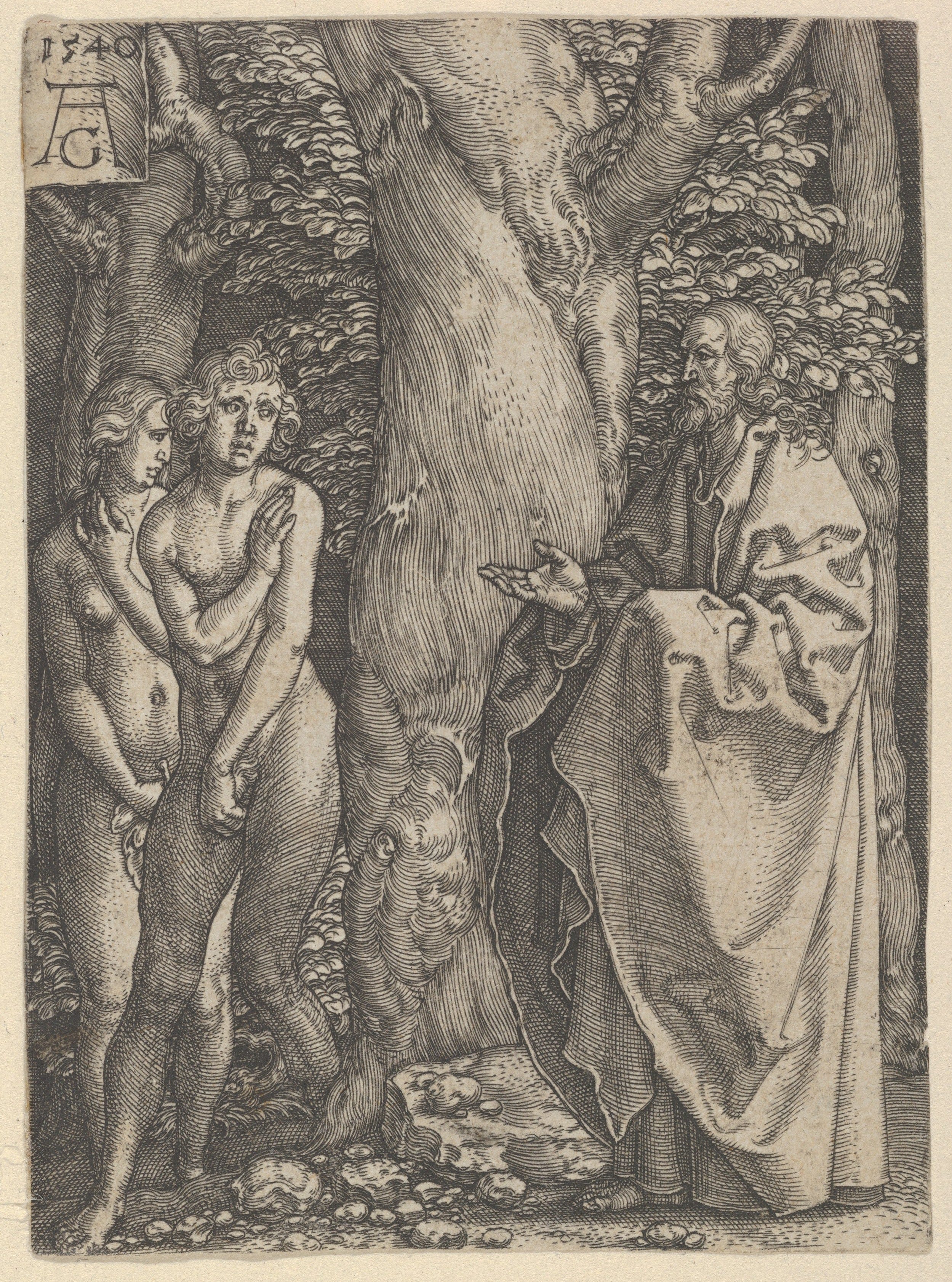
The first questions recorded in the Bible occur in Genesis 3. In the wake of creation and in the midst of a life lived in close communion with God and each other, the first people betray themselves and lose their innocence in the pursuit of autonomy. In grasping for the fruit3 of the Tree of the Knowledge of Good and Evil (Genesis 3:6-7), the first people became aware of their own self-conceit, something I think God had shielded them from in the innocence of their union with Him. As their eyes were opened, they chose to hide themselves from the Lord, a story as familiar to me as my own reflection (Genesis 3:8).4
Now, while this story is really familiar to most of us, I think it is worth suspending any plot knowledge of the end. Let’s allow the story to unfold.
In the moment, in the logic of the story, the people recognized their own vulnerability. In their nakedness, which was a gift without shame (Genesis 2:25), they now felt a deep need to hide. Where God’s provision had been enough for them to simply enjoy one another and be comfortable in their own skins, they now required clothing to feel like they could be connected.5 How might their dear friend, who was (perhaps) very different from them, think about them now that they are naked? What would this person say about their shame?
Have you ever had that feeling that the only thing to do was hide?
I remember the first time I encountered pornography, probably around 7 or 8 years old. I stumbled across a magazine hidden behind some books in our basement and, for what it’s worth, I didn’t really understand what I was looking at. I knew what nakedness was, but I had never seen people look like that or do things like that before.
It was shortly after the discovery that my dad walked down the stairs. As I heard him approaching, I felt heat, pressure, and shakiness. It was like my whole body was caught up in a pressure cooker. My first and automatic response caught me off guard, even then.
I hid.
I took the magazine with me, and I hid in the closet. I wasn’t afraid of getting in trouble or getting hurt. I just felt like I had to hide. I felt like I needed to avoid being seen by anyone, especially someone older than me.
Why hide at all?
As I read the Genesis 3 account, I can help but imagine the feeling of hiding there, in the midst of the garden. In the logic of the story, they didn’t know about the consequences ahead. Taking the text as it is, they didn’t have any reason to know that God would give them a consequence at all.6
In fact, the only explanation that the man can muster for hiding is that, “I heard the sound of you in the garden, and I was afraid, because I was naked, and I hid myself” (Genesis 3:10 NRSVUE).
This is a fear response. They had nothing to fear from their history with God, yet they operated as if something had gone wrong. While their external worlds were stable, their internal worlds weren’t. For whatever reason, but I would suppose “shame,” the first people (and all people) go into a fight, flight, or freeze, losing their capacity to be relational and to remember their history with their friend and Father.7
What we know about “flight-fight-freeze” responses is that it is incredibly challenging to move from these postures back to being open and relational on our own. I know that when I get very angry, and particularly when this anger is spurred on by a yelling, insolent 5-year-old, I need someone else to remind me to be present, and I need help remembering that I am safe and have agency.
They were alone and scared. They were afraid because they knew something that they couldn’t unknow. The first people, like all of us, lost their innocence in a failed attempt to become like God rather than trusting God to make them like Himself in time. Left to their own devices, they simply couldn’t handle the reality of their own vulnerability, from which God, as a loving parent, seemed to have shielded them.
Alone. Fearful. Flooded.
But this isn’t where God leaves them.
He seeks them out.
He seeks them out with questions, partnering with them to discover what happened and invite them to self-disclosure and self-discovery.
Like a good father and like a midwife, He is helping in the process of their giving birth to their new reality - one He would never have chosen for them.
Next week, we will talk about the God who keeps asking questions, and what that might mean for the kinds of questions we see in Genesis 3.
Plato trans. Benjamin Jowett, Theaetetus 141d, https://classics.mit.edu/Plato/theatu.html.
This is also a well-worn metaphor for spiritual direction. See, for instance, Margaret Guenther’s Holy Listening: The Art of Spiritual Direction (Boston, MA: Cowley, 1992).
Old Testament scholar John Goldingay doesn’t think that the fruit is magical or mystical, at least not necessarily. The act of eating the fruit in reference to the prohibition against eating it is what constitutes the new moral knowledge. In disobedience, they have become moral actors, like God himself, knowing now that evil exists as a foil to the good. See John Goldingay, Genesis, in the Baker Commentary on the Old Testament Pentateuch, ed. Bill T. Arnold (Grand Rapids, MI: Baker Academic, 2020), 76.
Seeing is a significant theme in Genesis 1-3. God himself sees his creation and calls it good, while the woman sees the fruit of the tree and takes it just a little later on. Seeing well is something that, in the logic of the story, God does. The serpent had promised that their eyes would be opened and that they would be like God, and he was mostly right. The implied meaning of his statement, according to Goldingay, was that they would be able to see things they couldn’t see before, something invisible. However, “They see something visible that they have missed or whose significance they have missed, rather than something that is invisible and life transforming in a positive way.” See John Goldingay, Genesis, in the Baker Commentary on the Old Testament Pentateuch, ed. Bill T. Arnold (Grand Rapids, MI: Baker Academic, 2020), 76. See also Nahum M. Sarna, Genesis, in The JPS Torah Commentary, ed. Nahum M. Sarna (New York, NY: The Jewish Publication Society, 1989), 25; Gordon J. Wenham, Genesis 1-15, in the Word Biblical Commentary, eds. David A. Hubbard, Glen W. Barker, and John D. W. Watts (Waco, TX: Word Books, 1987), 73-74.
Gordon Wenham makes the case that this story is probably explaining, in a worldview fashion, why people wear clothes rather than “idealizing nudity.” In the “garden state,” the first people were recipients of unmitigated divine providence, a sort of disconnection-less relationship with their Father who saw that their needs were met. To be unashamed, or perhaps unabashed or even “enlivened” in their nakedness, says much about their connection and sense of needful autonomy, even if it also serves the purpose of giving readers the reason people must wear clothes. “2:25 reiterates the contentment of the couple with God’s provision and fills in the background detail just enough for the understanding chap.” See Wenham, Genesis, 72.
There is a case to be made that, in eating the fruit, the people actually do become aware of violating a command from God. There’s an implicit sin-structure in the text, even if the word “sin” doesn’t appear anywhere. Genesis is a worldview story, a way of explaining to readers why things are the way they are, and any readers in Israel’s distant past would have understood that this story was about disobedience and disconnection. Still, in the logic of the story, the people had not experienced God as a disciplinarian but as a creator, leader, father, and friend. Literarily, if we take the story without its audience, we need to acknowledge that the impulse is to hide even when there is no history to suggest that hiding is the right thing. See C. John Collins, Reading Genesis Well: Navigating History, Poetry, Science, and Truth in Genesis 1-11 (Grand Rapids, MI: Zondervan, 2018), 175-179.
For a good introduction to these processes and polyvagal theory that is both readable and practical, see Hillary McBride, The Wisdom of Your Body: Finding Healing, Wholeness, and Connection through Embodied Living (Grand Rapids, MI: Brazos, 2021). I have found that polyvagal theory offers many helpful frameworks for interpersonal and spiritual work from a Christian perspective, even if some of the biological claims the original theorist, Stephen Porges, put forward have been met with pushback from the scholarly community.